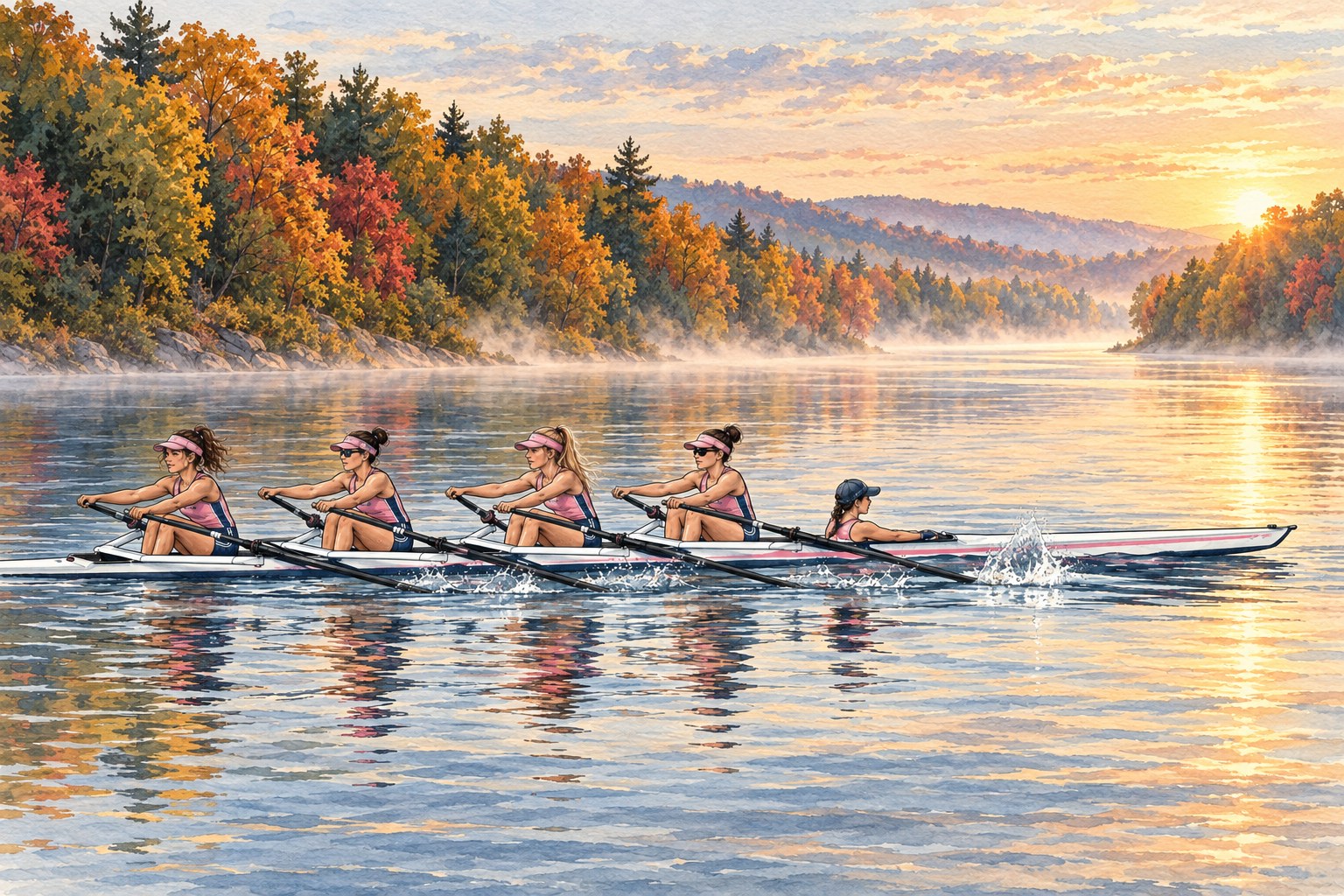
A head race is a race against the clock. Boats go through the start one at a time, thirty to forty-five seconds apart, and for most of the course there is nobody off your port or starboard side to measure yourself against. No lane, no crew to chase, no crowd at your shoulder. Just you, the boat, and the water in front of you. That's what makes it unique, and that's what makes it hard. A head race is as much a test of character and internal fortitude as it is of skill, strength and teamwork.
Here's how to have a great one. The first part is for the rower. The second part is for the people cheering her on.
You are already racing
The night before a race I tell my athletes: you are already racing. Everything you do between now and the finish line, every hour of sleep, every glass of water, every meal, lands on your result, one way or the other.
So sleep well. Eat well. And do not skip breakfast. If your race is early, get up early, eat, and go back to bed or read for a while, but do not row a long race on an empty tank. Hydrate the same way: sip steadily all morning. If you wait until you're thirsty it's already too late, and gulping doesn't get where it needs to go. Frequent small sips do.
Know your bow number
You'll go through the start in bow-number order, so know yours. In the marshalling area, find the two boats ahead of you in the order, slot in behind them, and stick to them. It helps the officials and it helps everyone.
This is also where the chatter stops. Not the talking, the chatter. Talk about the race. Be upbeat and positive. Don't spend a single thought on what could go wrong; spend them all on what you can do to make it go well. The preparation you've done. The work your teammates have put in. The race plan you've agreed with your coach, the target pace, maybe the target splits. Honour the process. Stick to the plan.
The course in your head
In the days before the race, and especially on a hotel night, sit down with your boat and go over the course together. Where are the turns, the hazards, the places where a crew ahead can be caught? Then pick four landmarks: roughly a quarter of the way, halfway, three quarters, and a spot about two minutes from the finish. Those four points are how you pace your energy so that you drain the tank completely and not a stroke early.
When you get to the venue, before the oars come down, take a minute to look at what's in front of you and match it to the map in your head. If your warm-up takes you up the course, make those landmarks real. Talk about where the push pieces go. Let the plan crystallise.

The night before. Four landmarks, one plan.
Alone on the water
Head races are hardest of all for coxswains, because you may row the whole course without another boat to engage with. The answer is to give the crew something to work on in one-minute pieces: a minute of clean catches, a minute of suspension, a minute of timing, a minute of big exhales and a good breath, a minute of setting the boat. Then again.
And the rowers talk. Not sentences. Every minute or so, two or three words down the boat: "Let's go." "You've got this." Nobody but the coxswain gives instructions, and nobody says more than four words in a row, but everyone pushes, encourages and inspires.
When there is another boat
If you find yourself near another crew, race them. Overtaking proves your speed, it's exhilarating, and the excitement of one pass is fuel for the next.
If a faster boat comes up behind you, fight them for as long as you can. Use their speed to dig deeper and go faster. Never let a faster boat walk through you because you've decided they're faster. Fight them, fight them again, and hold them off. Fighting off a fast crew is one of the best ways to post a fast time of your own.
The two things that matter most
Technique. Row cleanly and efficiently, and the boat runs further between strokes. You finish the course in fewer strokes and less time simply by rowing exceptionally well.
Courage. At some point you will be tempted to take one light stroke, because no one can see you and you can get away with it. One light stroke becomes two, and later ten. Never let yourself go. The answer is nearly always in your breath: big exhales, get the oxygen exchange going. And when the voice says give in, commit to ten more strokes. Better, twenty. When you reach seventeen and realise you've managed, commit to another twenty. Before you know it you are through the pain barrier and you never gave in.
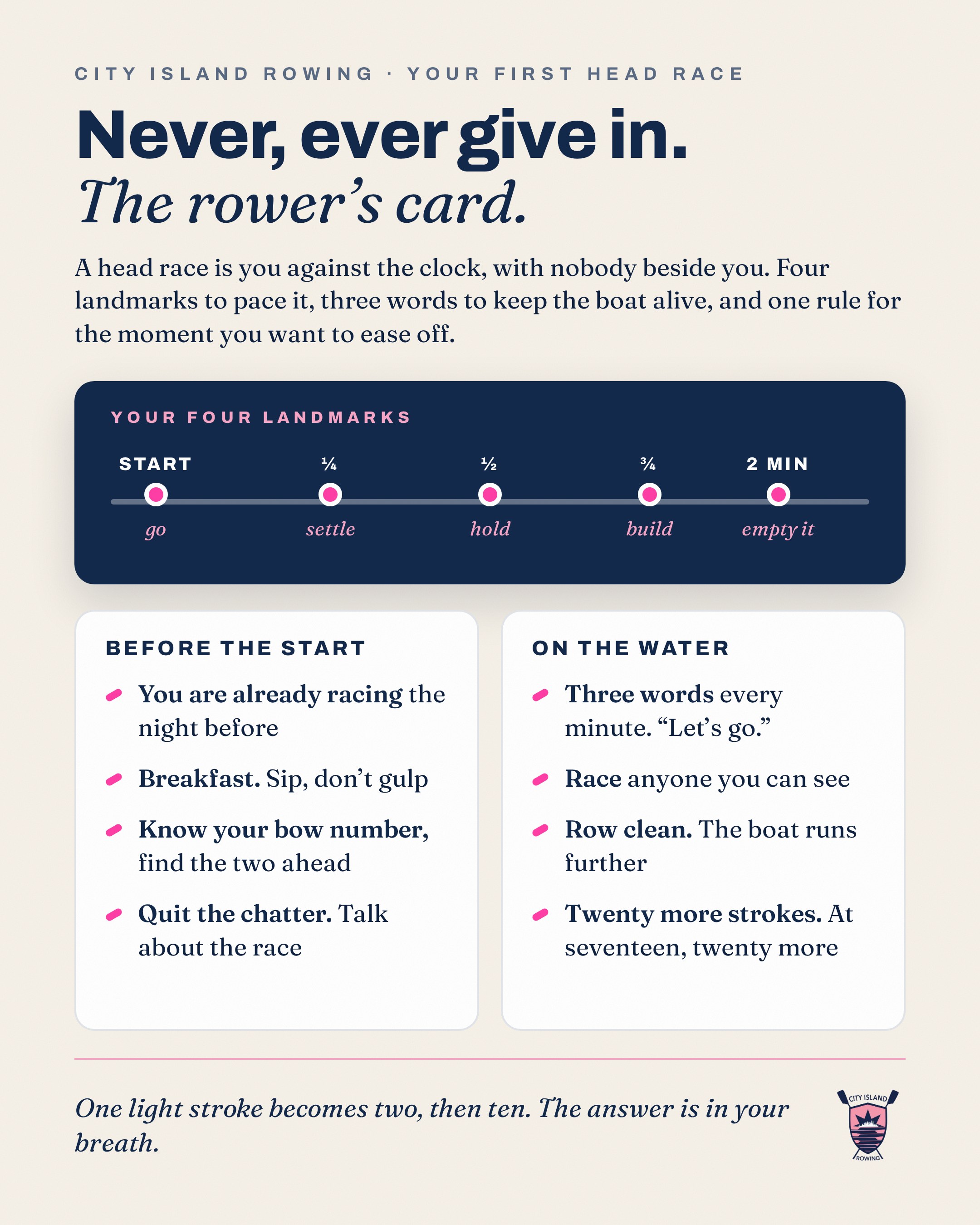
The rower's card.
Save it for the hotel table.
How to watch a head race
Head racing is hard to appreciate from the bank. There's no side-by-side, no photo finish, and the boat you're waiting for goes past in about twenty seconds. So here is how to watch one well.
Cheer, loudly. The single most useful thing you can do. When your boat comes past and you are making noise, the coxswain will call it: that noise is for you, that's our parents, that's our extended family, they're watching, let's make them proud. For as long as the boat is inside your auditory window, those athletes row the hardest strokes of their entire race.
Spread out. Some parents at the start, some in the middle, some at the finish. Starts are exciting, finishes are exciting, and the middle is where races are won. Not every course gives you all three, but most do. At the Head of the Charles we put a support contingent on every bridge, so each crew gets a wall of noise several times along the course.
Bow numbers are a hint, not a result. Boats start in bow order, so if your athlete went off as bow 28 and passes you ahead of 27 and 26, she has probably overtaken both, which is a very good sign. But marshals can't always send boats through in exact order, and a higher number passing you first might have started out of sequence or might simply be the fastest crew on the water. Your crew may still be doing exceptionally well. Read the order for fun; believe the official results.
Put the phone down. A few of the big races post split times as the race unfolds, and very little phone video holds anything worth keeping. Live in the moment. If you're rarely, genuinely close to the action, film it, or better still hand your phone to someone who doesn't have a child in that race and cheer your lungs out.
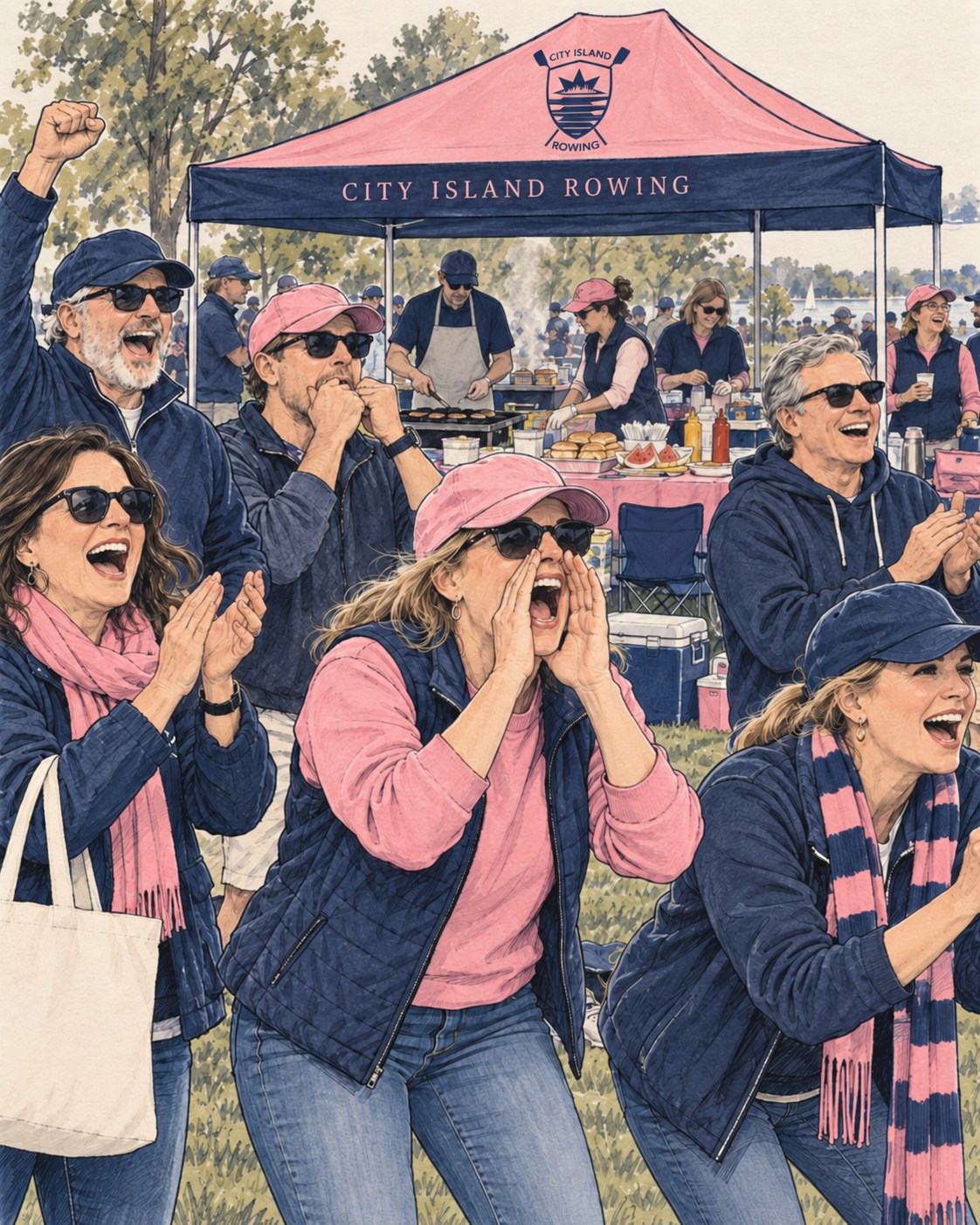
That noise is for you.
It takes a village. Nearly every parent says to me, if there's anything I can do, let me know. It begins at the parent association tent. Get involved even when it isn't your assigned weekend: put up tables, take down the tent, change the trash, flip burgers for ten minutes while someone else's daughter races so that parent can go and watch her. Learn names. Introduce yourself. Get to know your athlete's teammates and their parents, because these are going to be important people in her life: carpools, overnights, long regatta weekends. This is where the support system gets built.
Cheer every CIR boat. Look at the schedule before you set out. Arriving fifteen minutes earlier catches another of our races. Staying half an hour longer catches one more. Do it for a teammate, and her parents will do it for yours, and the parents become a team of their own. There is so much to be had from a regatta.
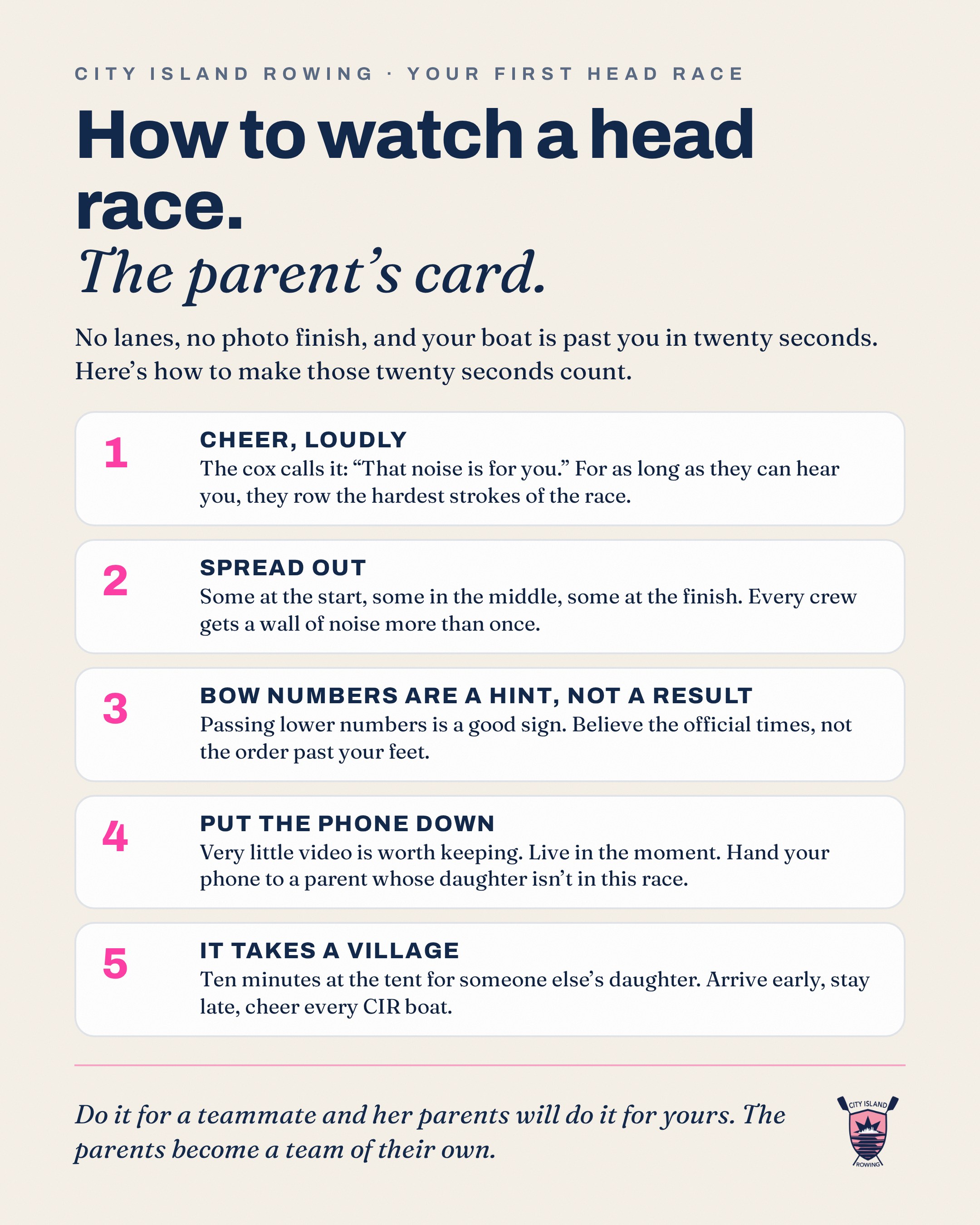
The parent's card.
Forward it to the grandparents.
For the rower: sleep, eat, sip. Know your number. Know your landmarks. Talk in three words. Race anyone you can see. Row cleanly, breathe big, and when the voice says ease off, commit to twenty more. For the parents: spread out, make noise, put the phone down, and be at the tent for someone else's daughter. Then look at the results together.
Never, ever give in.