The lineups go up. Someone isn't in the boat she wanted, and within the hour a sentence arrives that has been said at every boathouse in the world: she got the seat because she's the coach's favorite.
Here is the problem with that sentence. Why would the coach of a competitive program put out a lineup they don't believe is the fastest? It is in nobody's interest. Not the coach's, not the team's, not the athlete who was supposedly favored. The sentence is comfortable because it asks nothing of anyone. It is also wrong, and the rest of this post is about what a coach is actually looking at when the boats get made.
Most of it isn't what you'd think. It isn't the erg score, and it isn't who looks fastest today. It is a quality that is easy to see from the launch and surprisingly rare: coachability.
What a coach sees on the dock
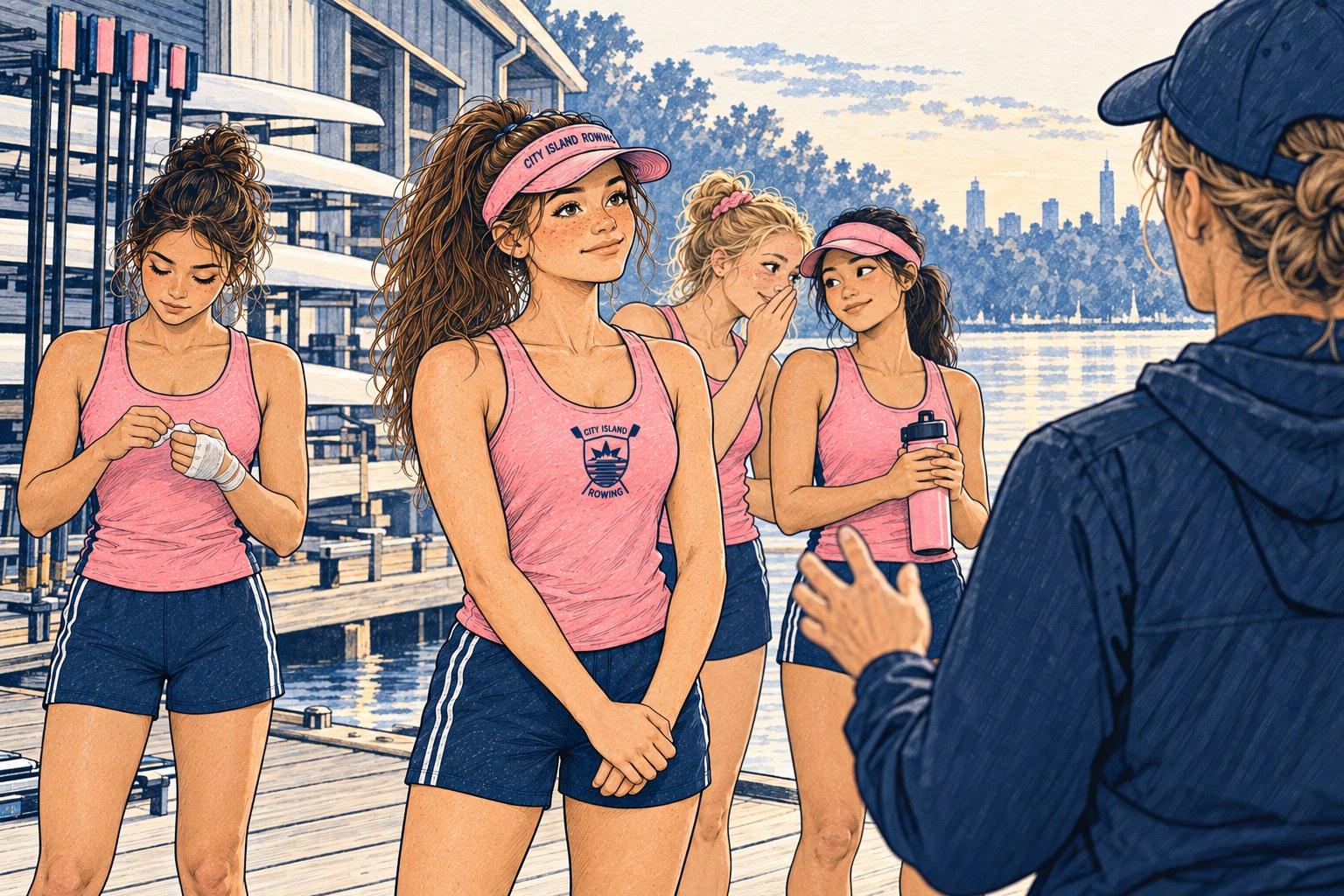
Before a piece, the coach stands on the dock and says: this boat, this piece, this is what we are working on. Look at the group and you can sort it in seconds. Some athletes are standing still, making eye contact, listening. Before they have taken a stroke they are already thinking about the change. Others are looking anywhere but at the coach, and the eyes have gone glazed. And then there is the back of the group: talking, nudging, picking at the tape on their hands, playing with a water bottle, looking around. Not even vaguely interested.
That is where coachability begins. Not with the correction itself, but with whether the instruction was absorbed at all.
Then the boat goes out and the correction comes. Nobody expects it fixed on the next stroke. What the coach is looking for is evidence that the athlete is trying to make the change, because without the trying it never happens. Some athletes get a correction inside ten minutes. Some are still fighting the same one three or four years later. The difference between those two athletes is not talent. It's coachability.
Here is a small test you can run on yourself. Drills in an eight often go by half boat: stern four rows the drill while bow four sits it out, then they swap. Watch the bow four. Some are watching the stern four and listening to every word of feedback. Some are looking at the shoreline. When the drill turns over, it is obvious who was listening, because they row it better than the stern four did. They heard the instruction twice and saw it in action. Imagine you are the one getting the feedback, so that when it's your turn you can simply do it properly without being told. Do that and a coach has complete faith in where you're headed.
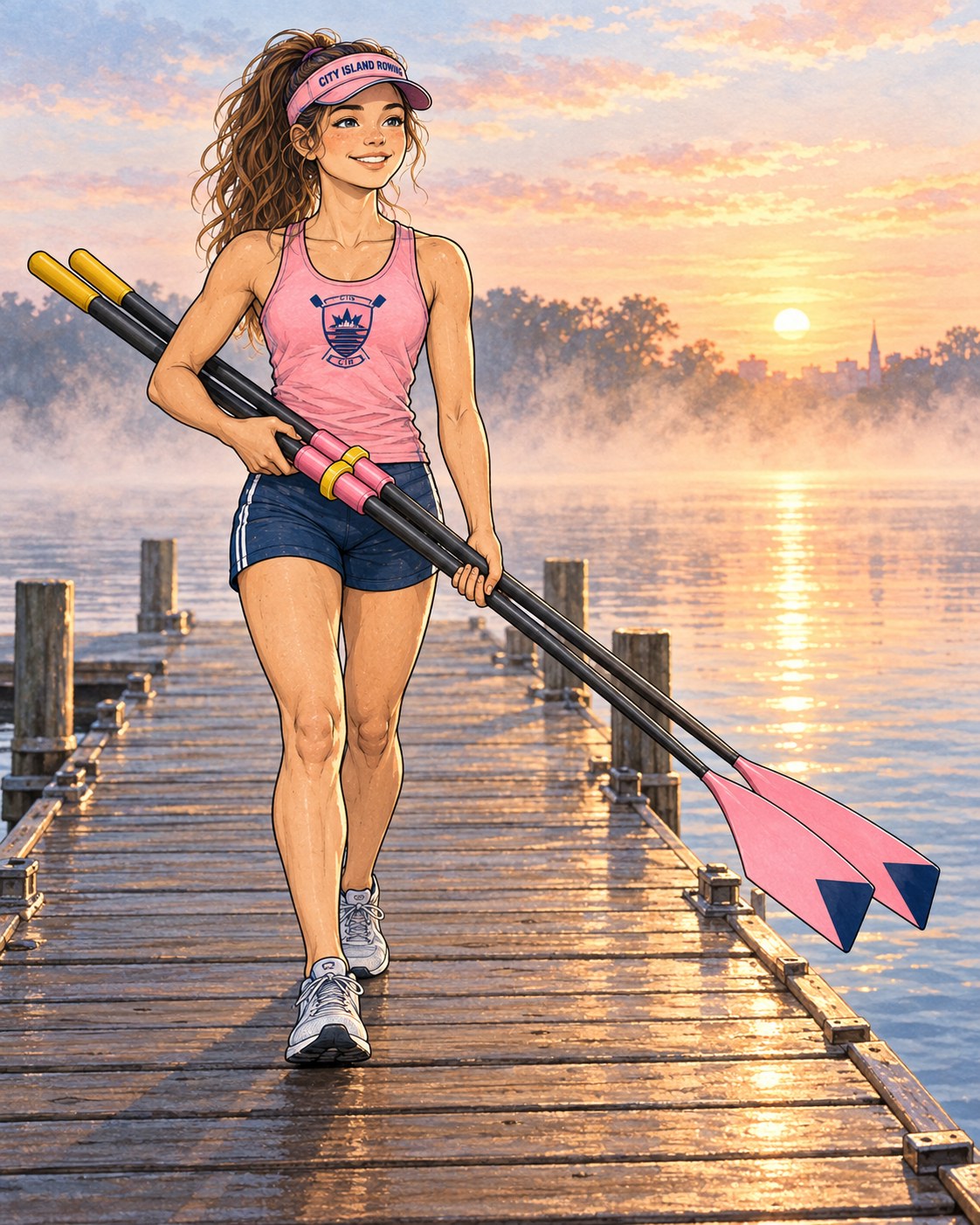
How you do something
is how you do everything.
Never fear feedback. Fear the silence.
Some athletes dread being coached. They don't get the change straight away, they feel everyone is watching, they feel picked on. So they shrink from it.
Turn that around. When a coach gives you feedback it means they are still invested in you. They believe you can change and they want to help you do it. Fear the day the coach goes quiet, because silence means a decision has been made: this athlete isn't worth the extra time, because others are a better investment.
Picture three rowers. One listens, makes eye contact and changes almost instantly. One takes a few more corrections but gets there. One shows no sign of listening or trying for a very long time. The coach is thinking about trajectory, about who will be the better athlete in a month, and that is where the time goes.
Train it, then ingrain it
A correction that lives only inside the drill is worthless. The athlete fixes it for the drill, the drill ends, the old habit comes straight back. If someone tells me halfway through a drill that they've fixed it, I know they haven't.
The ones who are going somewhere keep working the change through the steady state afterwards, when it is no longer the focus and nobody is calling it. Train it, then ingrain it, until you can do it without thinking. There is a popular idea that mastery takes ten thousand hours. The rowing version is simpler: it takes ten thousand strokes of thinking about it before it becomes a habit.
Why it matters: in the last five hundred metres of a race, exhausted, you will not be able to coach yourself through a stroke. You are in survival mode and your form breaks down to its lowest common denominator, which is to say, to your habits. If good technique hasn't been ingrained, it leaves you in the race. And the athlete whose technique holds under that kind of pressure is the one who gets the seat. That is the first place coachability and seat selection meet.
The little word extra
Every coach sets expectations beyond the practice itself: when to arrive, the warm-up, the stretching at night, a run or an erg piece on your own, eating like an athlete. Nobody checks. And it is completely obvious who takes it to heart and who ignores it. The difference between ordinary and extraordinary is that little word, extra.
It shows up in smaller places too. How you walk through the gate, how you carry the oars down to the dock, how you set them down. How you do something is how you do everything. Pride in the mundane tells a coach exactly how you'll behave when it's hard and when no one is watching, and the reverse is just as true.
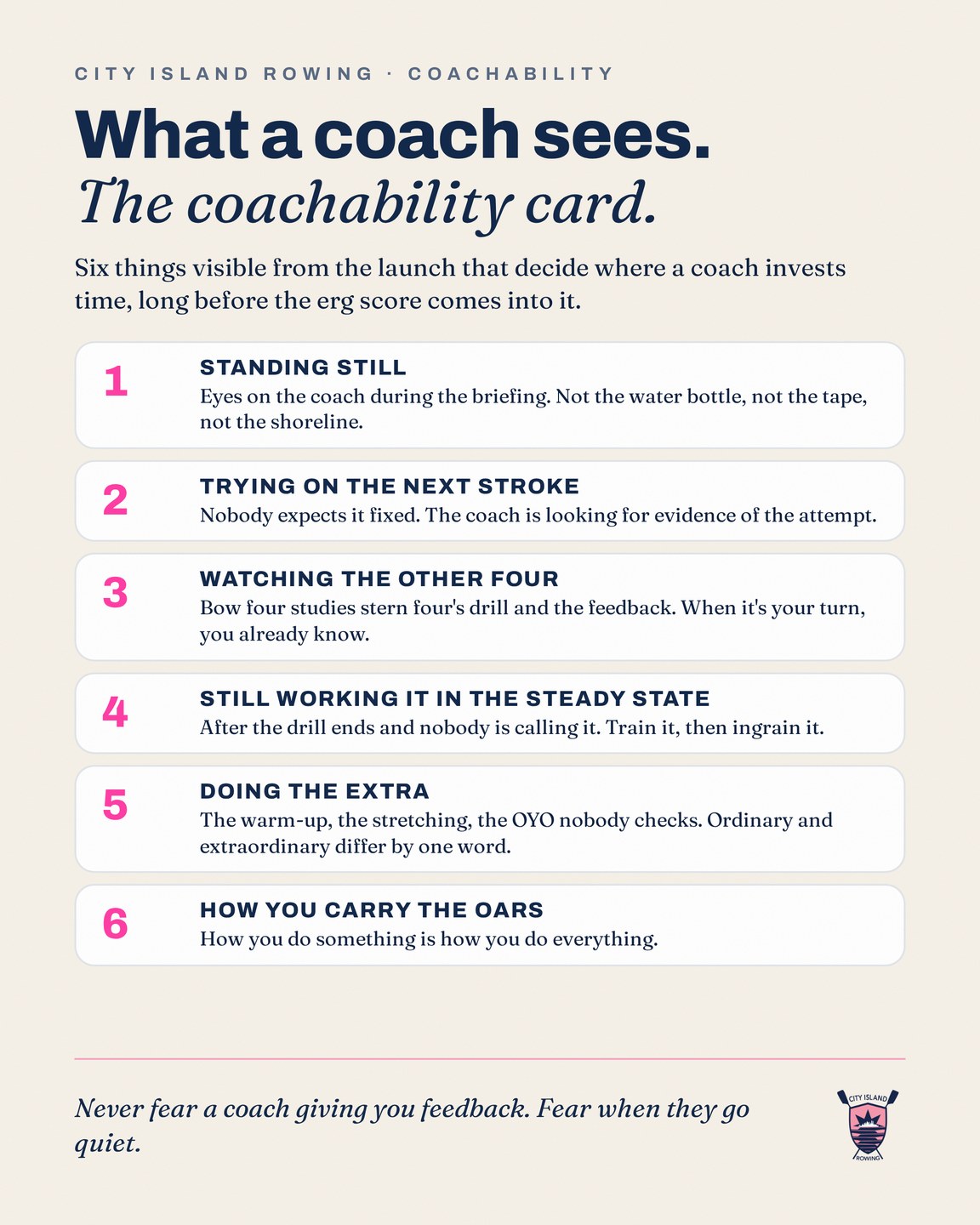
The coachability card.
Six things visible from the launch.
How seats actually get decided
There is no secret recipe, and it's roughly the same at every serious program. In order:
Technique. Are you efficient at moving the boat? Are you in time? Does your stroke make the boat run?
Trajectory. Not who is fastest today, but who will be fastest in a week or two based on what they're doing right now. An athlete on a tear will nudge out one who is coasting, because hunger is what we want in the boat, and the energy goes into the crew that will be fastest by the end of the season, not the start.
Team chemistry. Racing hurts, and the biggest temptation in the middle of a race is to go light for one stroke. A crew with real respect for each other doesn't do that to each other. Their desire for the team's result keeps every one of them at full output. That is a selection criterion.
The erg. Strength and fitness matter, but the erg score is not in the top three. It's a good indicator and a differentiator when everything above is equal. And it is never raw output. Two athletes with the same score, one much bigger than the other: the smaller one is moving the boat more efficiently. The bigger you are, the faster your score should be. If someone smaller is matching you, she is faster on the water.
Attendance. Come to the practices you are committed to. Missing them says your interests outrank the team's, and you cannot expect your teammates to do the work and then take a ride on race day.
Early in a season, lineups are experiments. The coach is finding out which combinations move. With younger crews especially, a seat this week is not a seat in two weeks if someone else is on a more ambitious path. The athlete who got comfortable thinks she made the boat. The real question is what she did with the opportunity. And when a seat changes hands, the athlete coming in has earned the look. Nobody is handed a go so that everyone gets a chance. You can't stop the boat at halftime for a seat change, so the coach is always watching who is in the mix.
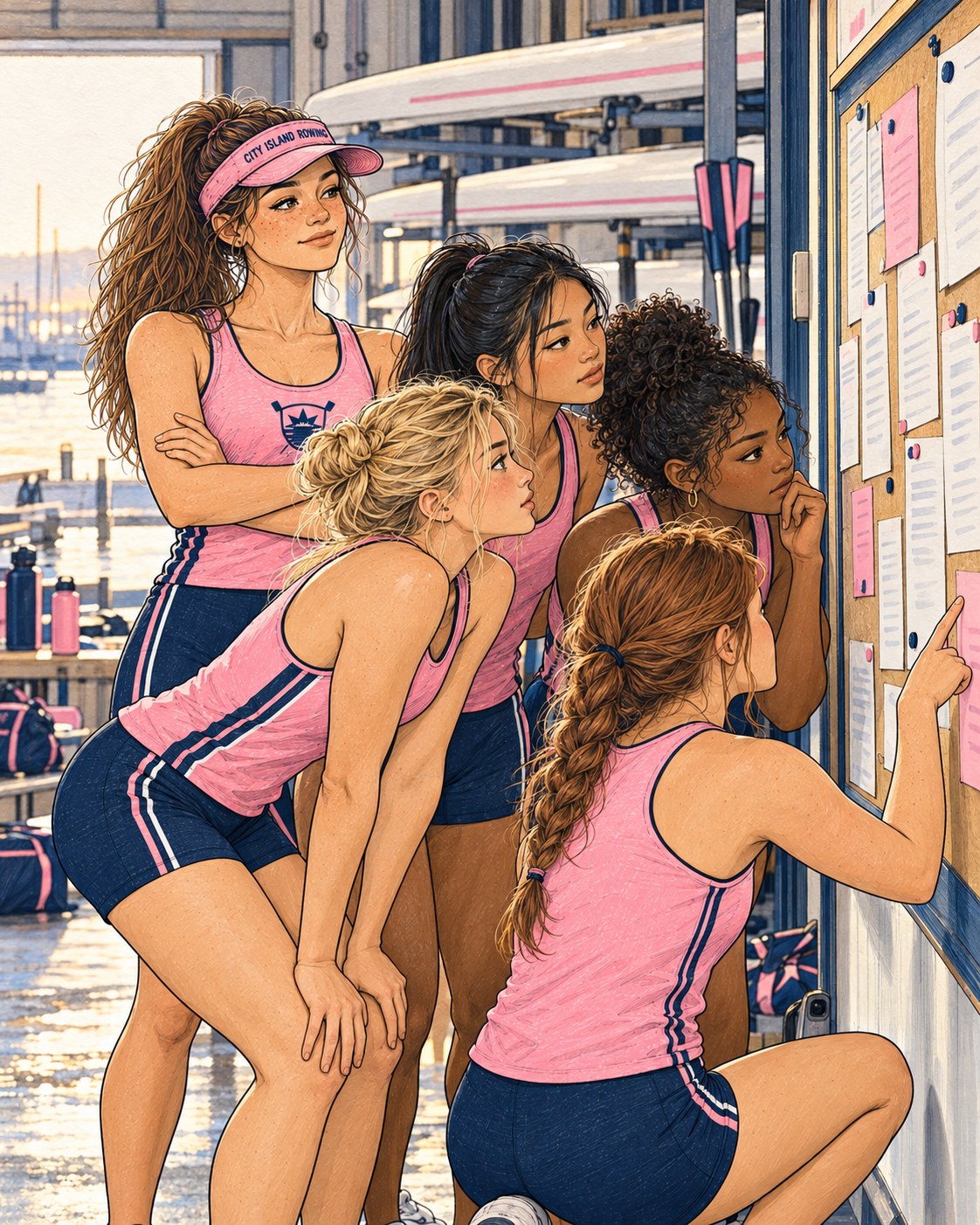
The board goes up.
What did you do with the seat you had?
A word to parents
When your children play each other off against you, you see through it in a second. You know there's context missing before the sentence is finished. Then the same child comes home and says something about a coach, and the radar switches off.
Two things are usually going on. The first is that a kid who didn't make the boat she wanted is worried about disappointing you. So the explanation becomes favoritism, or something else that asks nothing of her. The second is the sentence very few athletes have the courage to say out loud: "Sally does two hours of extra work a week. Sally says hello to every teammate when she walks through the gate. She stands still and listens and makes eye contact. When the coach asks for a change in a drill, she makes it immediately. When something isn't working behind her, she quietly turns round and helps. In the middle of a race, she is the one everybody can trust not to take a light stroke. And I don't do those things."
That sentence is hard. It is also the whole answer, and it brings us back to where we started: no coach puts out a lineup they don't believe is in the team's best interest.
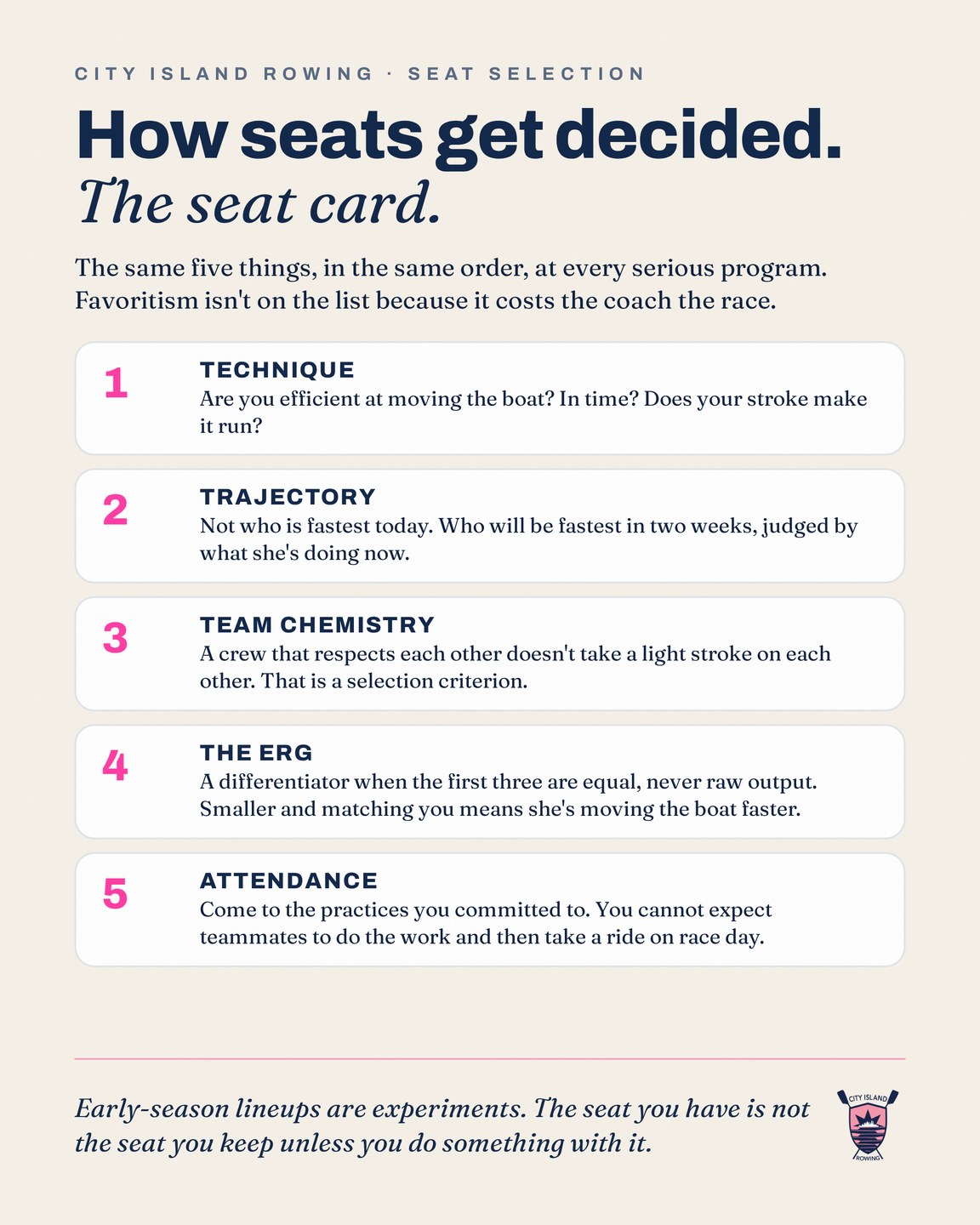
The seat card.
The same five things at every serious program.
Yes, coaches have favorites. Their favorites say hello at the gate, to their teammates even more than to the coach. They do their own training and post it, then go and encourage the teammate who posted after them. They stand still, listen, and change on the next stroke. They pick up the jobs nobody wants: de-rigging, loading the trailer, clearing up after a regatta. They are always doing something.
None of that decides who sits in the first eight. On race day you still have to row exceptionally well, individually and as a crew, with the chemistry, the mindset and the fitness to match. Some of those favorites have rowed in the third eight.
Stand still. Listen. Change on the next stroke. The seat follows.